Topic week
A Strawberry Unit Study Week for Ages 4–7
11 minute read · Updated September 7, 2026
A strawberry week works when the fruit is in the kitchen, at the market, or growing nearby. You do not need a farm visit or a full science curriculum. You need one repeating question—what is a strawberry plant doing?—and a few short, screen-free ways to look closely.
This plan is a supplemental unit study, not a complete homeschool program. Keep phonics and mathematics in their usual place. Use strawberries to practice noticing, naming, comparing, and explaining. Print only the pages you will actually use.
Optional printables
Pages that pair with this week
You do not need every pack. The first title is the spine; the others are contrasts. Guest checkout is available. These are supplements, not a full curriculum.
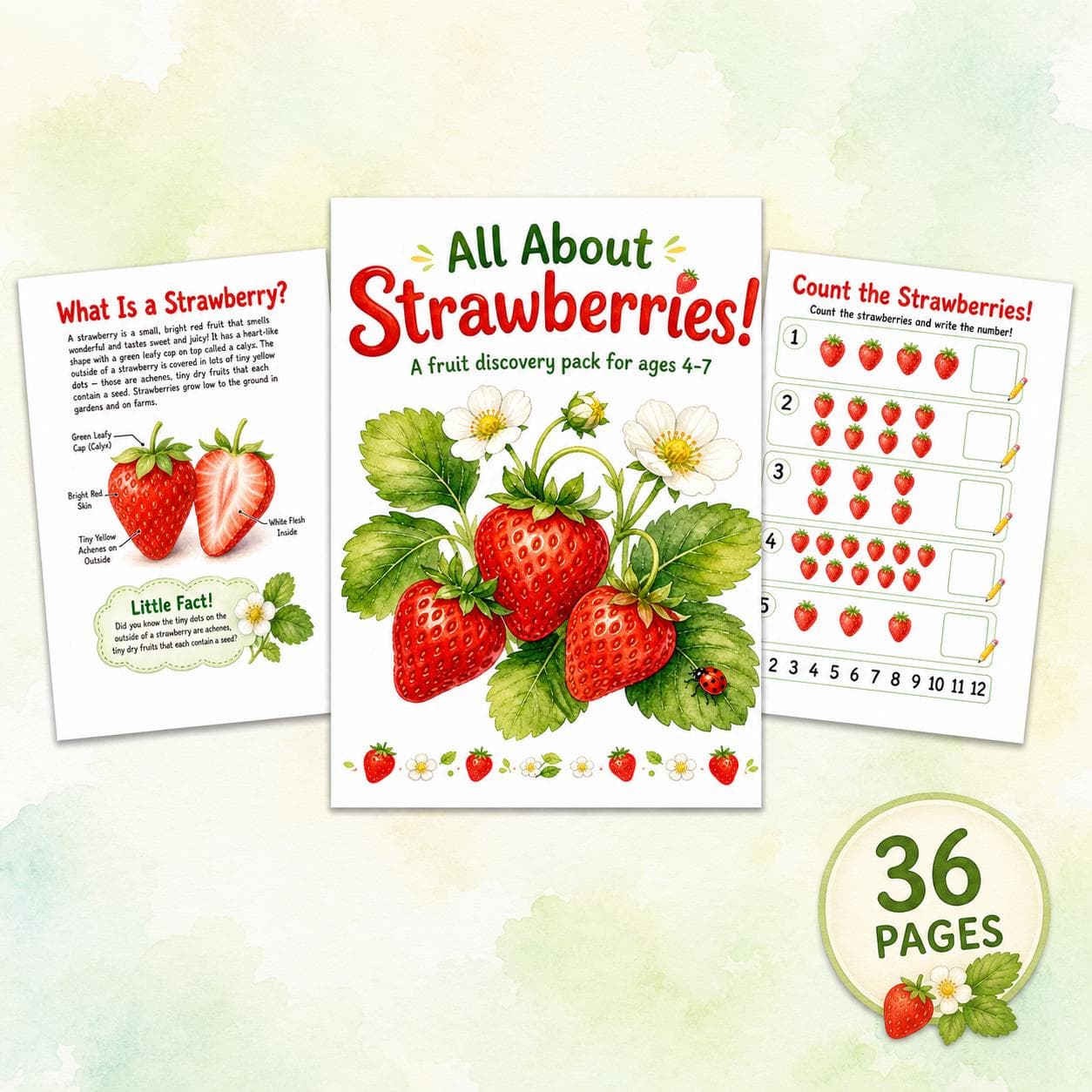
Spine pack
Optional extra
Optional extra
Optional extra
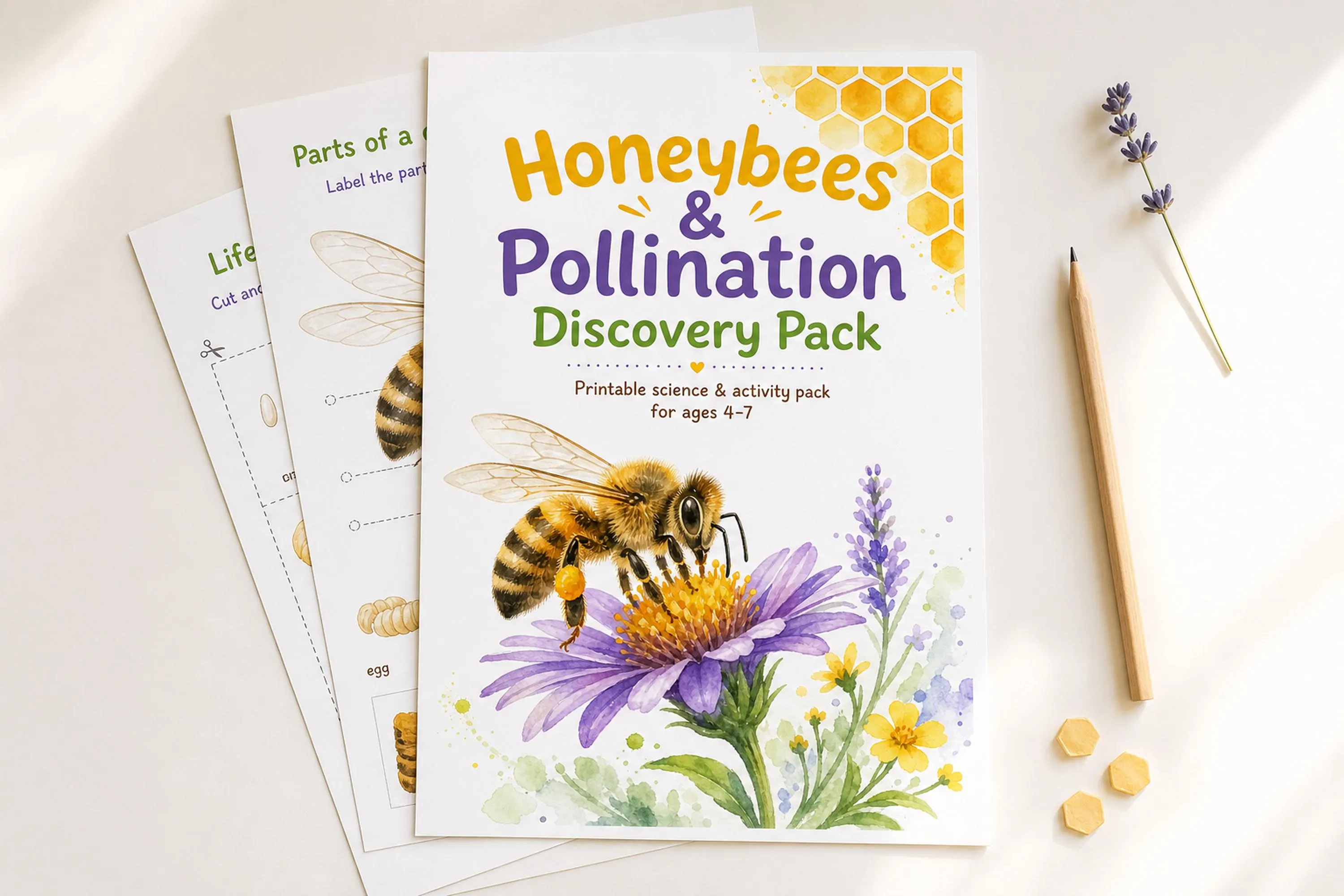
A five-day plan
Keep your usual reading and math. Use this block as the topic time. Skip a day if life is loud; the order matters more than the calendar.
Day 1
20–30 min
Step 1
Look closely
Observe a whole strawberry. Name color, seeds on the outside, leaves, and smell. Draw what you see. Then open one strawberry page that matches observation, not a packed review sheet.
Day 2
20–30 min
Step 2
Plant parts
Talk about root, stem, leaf, flower, and fruit. Match parts on a printable. If you have a plant, find those parts on something living rather than only on paper.
Day 3
25–35 min
Step 3
Flowers and bees
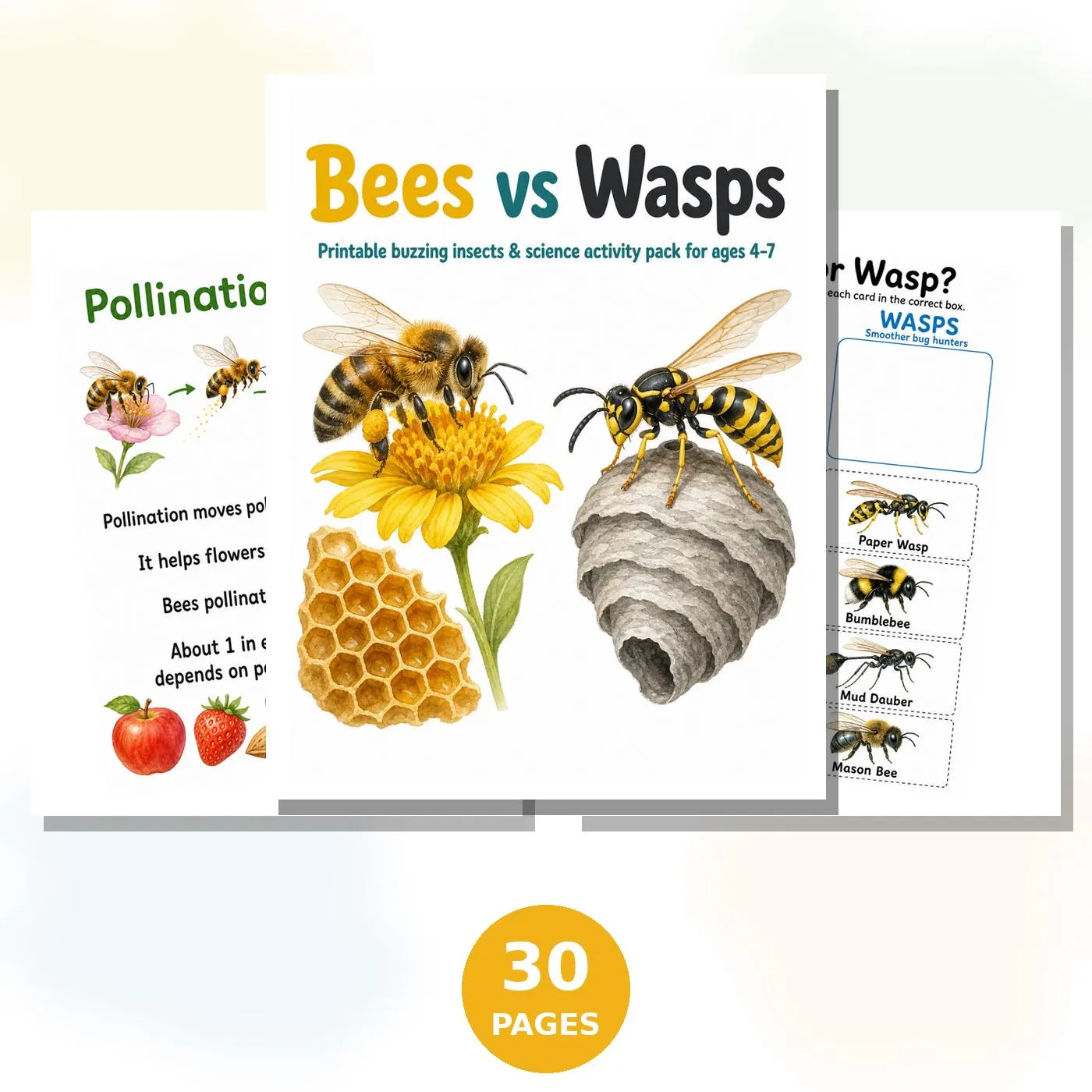
Ask how a flower becomes a fruit. Use a bee or bees-versus-wasps page to talk about pollinators without turning the day into a fear lesson about stings.
Day 4
20–30 min
Step 4
Compare another fruit
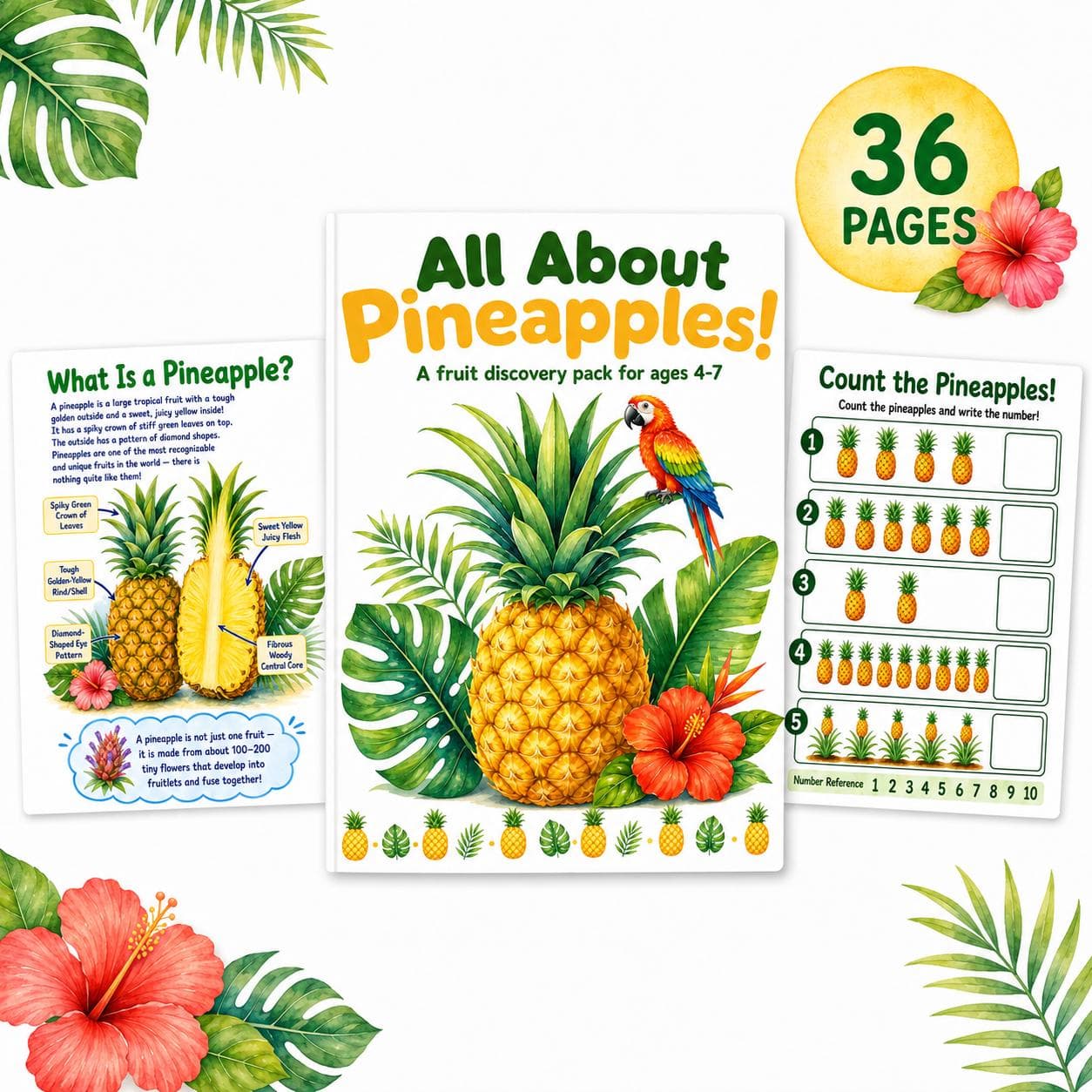
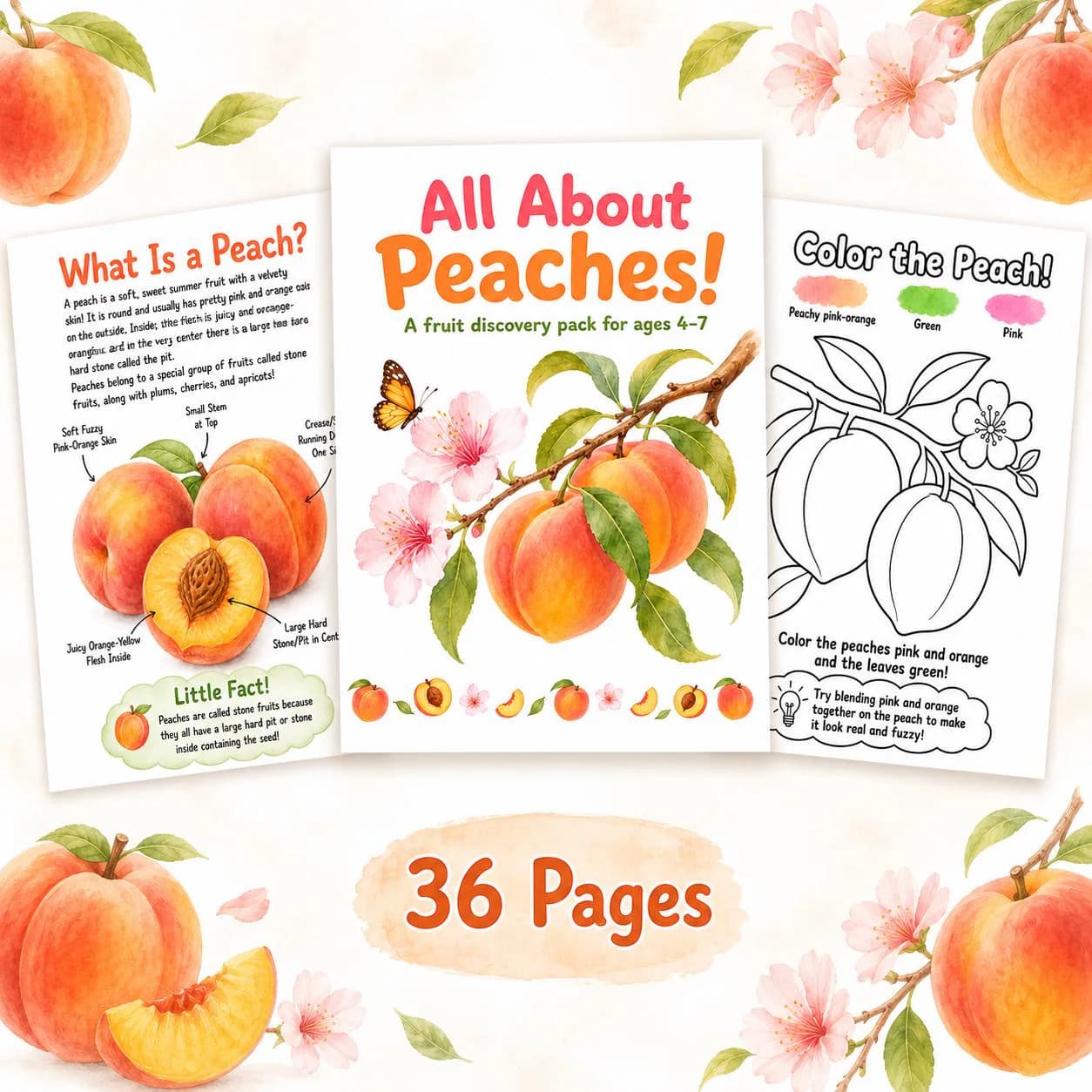
Look at a pineapple or peach page. How is the skin different? Where do the seeds live? Children remember strawberries better when they have a contrast.
Day 5
20–25 min
Step 5
Tell what you learned
The child teaches you: three facts, one drawing, and one remaining question. Skip extra pages. Capture the question for a library book or a later week.
What to gather
- A real strawberry to look at and, if you wish, taste
- Paper, pencils, and crayons
- A magnifier if you have one
- Printed pages for only the next day or two
What this week is for
The goal is not to finish a 36-page pack. The goal is for a child to notice that a strawberry is a plant part, that flowers come first, and that other fruits solve the same job in different ways. If your child is still sounding out words, keep writing light: you can write their spoken captions.
Choose pages by the day's question. Cover extra boxes on a busy sheet with a blank card so the finish line stays visible.
How to use the strawberry printable
Preview the pack and mark five pages: one observation or labeling page, one plant-parts page, one life-cycle or flower page, one counting or matching page, and one drawing or narration page. Leave the rest in the file until a later week.
Sit beside the child for the first page of a new format. After that, independent work should be a format they already understand. Ask them to explain one answer out loud before putting the page away.
Bring pollinators in without crowding the week
Strawberry flowers need pollination. A short bee activity makes that idea concrete. Use bees versus wasps only if your child is ready to compare two insects; otherwise stay with a simple bee life or flower page.
Do not require a child who is afraid of bees to complete every insect page. A photograph, a book, or watching a flower outdoors can carry the same science idea.
Compare pineapple and peach on purpose
Pineapples grow as a cluster of fruitlets. Peaches have a large stone. Strawberries wear their seeds on the outside. Those three facts are enough for ages 4–7. You are building comparison, not a botany degree.
If you only own the strawberry pack, skip the extra fruit pages and use a real second fruit from the kitchen instead. The printable is a convenience, not a requirement.
Keep literacy and math in the background
Count seeds in a small group, sort berries by size, or dictate labels. Do not replace your usual reading lesson with themed handwriting unless writing is the day's chosen skill.
A child who loves strawberries may still need ordinary phonics. Theme weeks fail when every subject is forced into the fruit.
Close the week with evidence
Ask: What did we observe? What is still a guess? What would we check in a garden or book? Write the leftover question on a sticky note. That is scientific habit, and it takes two minutes.
If the week felt rushed, you succeeded if the child can still describe a strawberry plant part and one way fruits can differ. Extra pages can wait.
Common questions
Is a strawberry unit study a full science curriculum?
No. It is a short supplemental topic. Keep your core skill teaching and use the fruit to practice observation, vocabulary, and comparison.
What if we cannot buy a real strawberry?
Use a clear photograph, a library book, or a frozen berry. Direct looking still matters more than decorating a worksheet.
Do we need every fruit printable listed here?
No. The strawberry pack is the spine. Pineapple, peach, and bee pages are optional contrasts. Buy or print only what you will use this week.
Related homeschool guides
Topic week
Ocean zones for ages 4–7
Topic week
Space printable week
Topic week