Topic week
A Life-Cycle Homeschool Week: Frogs, Chickens, and Plants
11 minute read · Updated September 7, 2026
Life cycle means a living thing has stages and, in many cases, offspring that start the story again. Young children understand this best by lining up pictures in order and telling the story, not by memorizing Latin stage names.
Compare at least two living things. A frog is not a chicken. A strawberry plant is not a frog. The comparison is the science.
Optional printables
Pages that pair with this week
You do not need every pack. The first title is the spine; the others are contrasts. Guest checkout is available. These are supplements, not a full curriculum.
Spine pack
Optional extra
Optional extra
Optional extra
A five-day plan
Keep your usual reading and math. Use this block as the topic time. Skip a day if life is loud; the order matters more than the calendar.
Day 1
20–30 min
Step 1
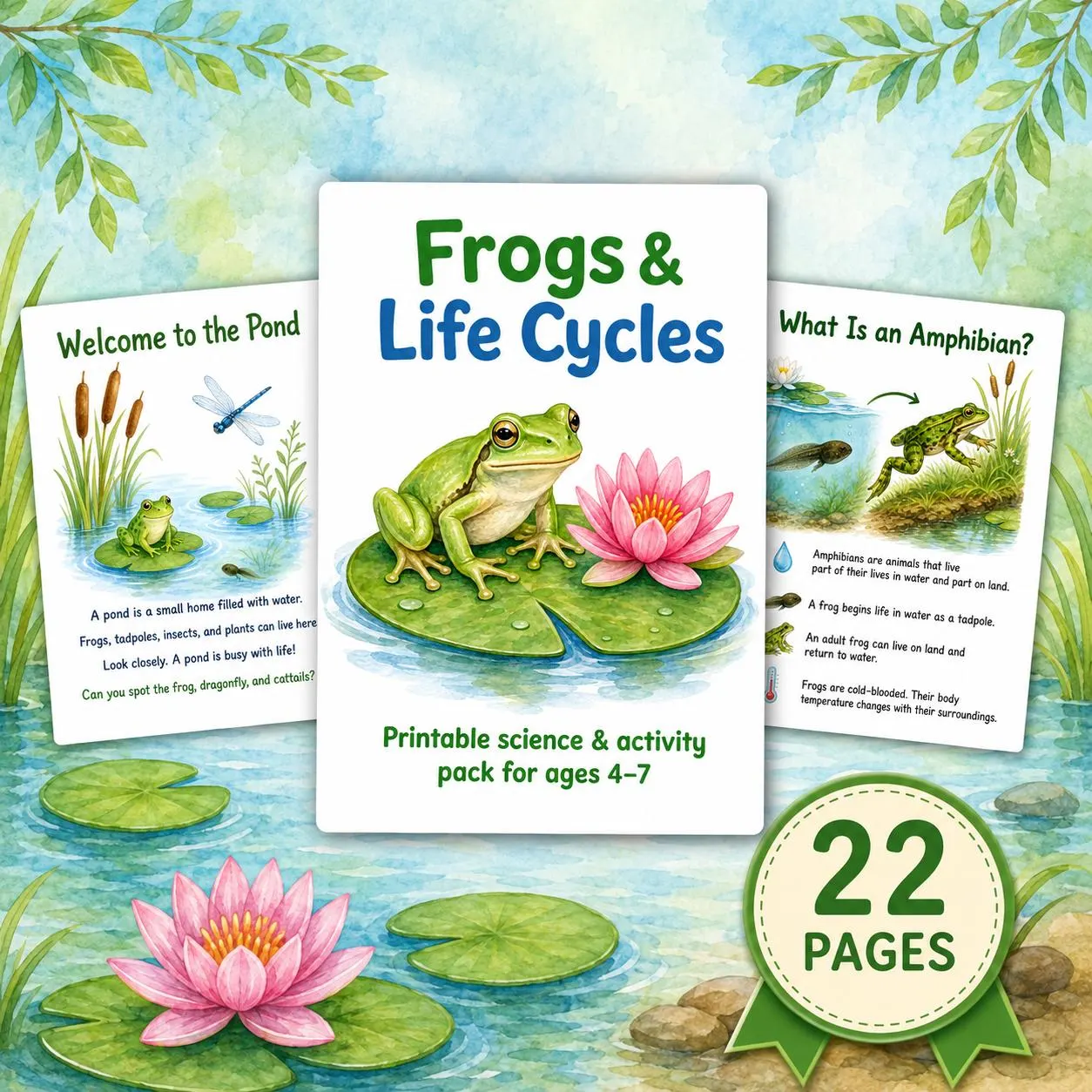
Frog stages in order
Egg, tadpole, froglet, frog—or the stages your page uses. Mix them up and have the child fix the order. Tell the story aloud.
Day 2
20–30 min
Step 2
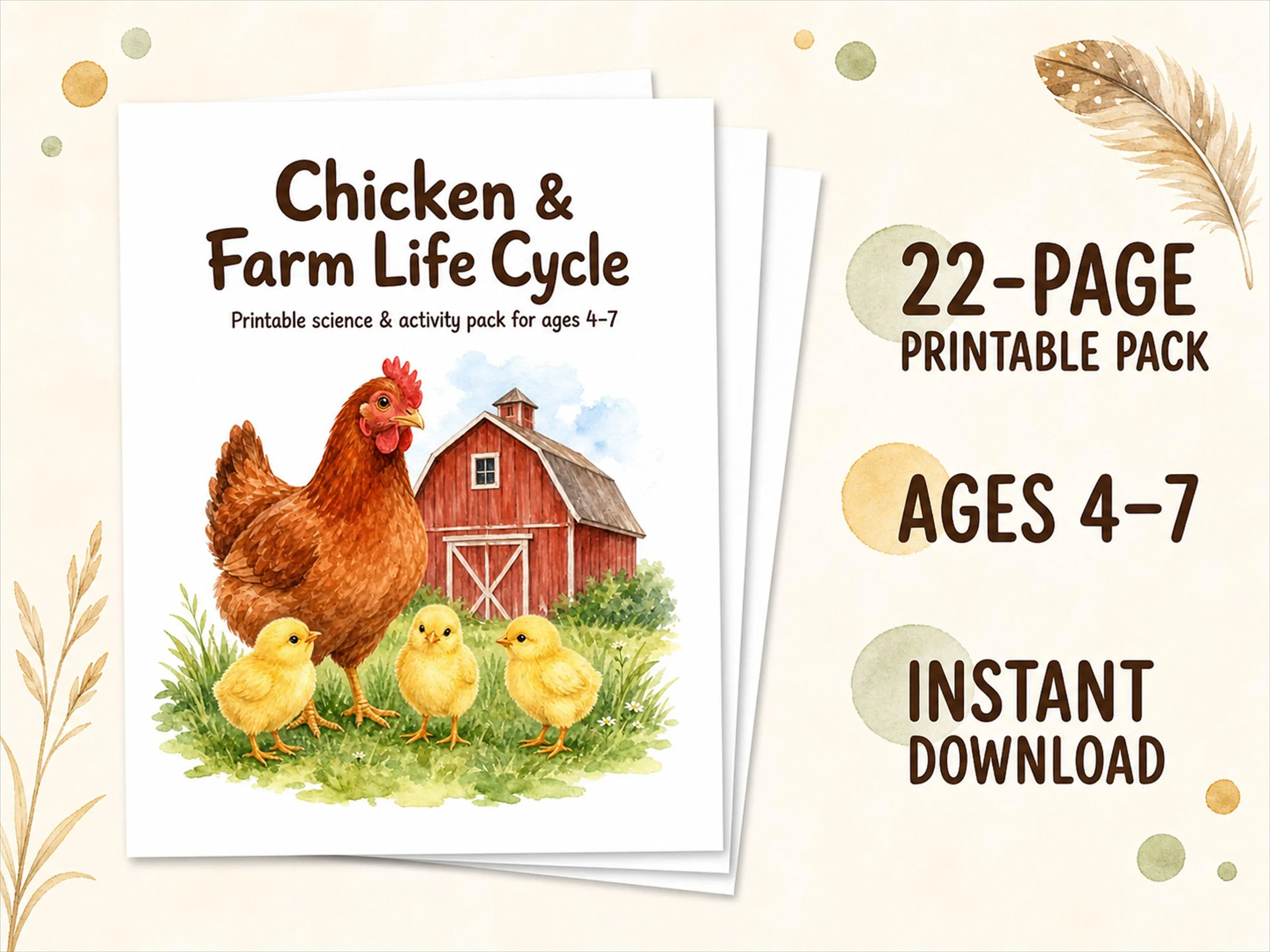
Chicken stages in order
Egg to chick to hen or rooster, at kid level. Compare: both start in eggs, but a chicken does not swim as a tadpole.
Day 3
20–30 min
Step 3
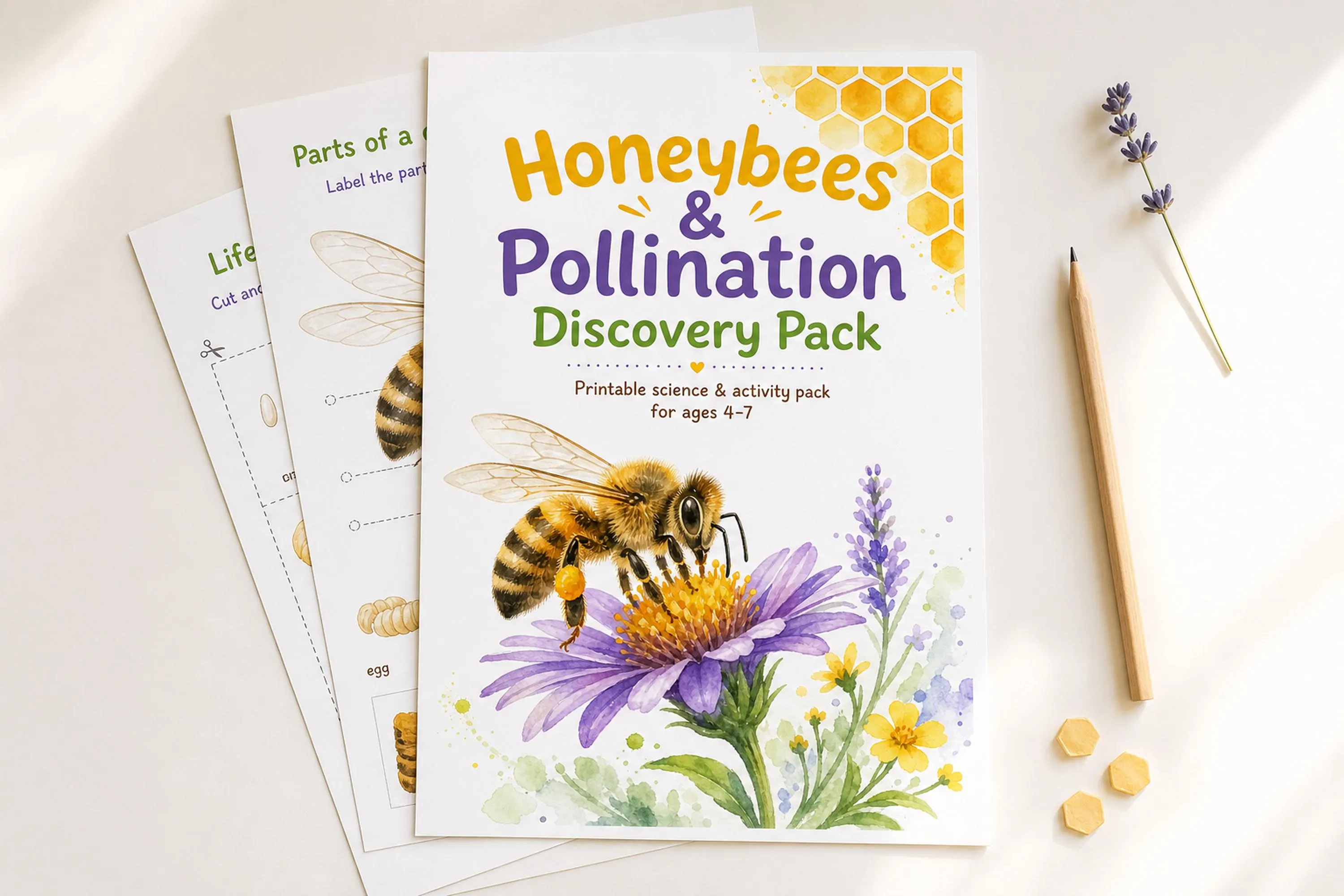
Insects in brief
A bee page can show egg–larva–pupa–adult if the child is ready. If not, talk only about ‘young bee’ and ‘adult bee.’
Day 4
20–30 min
Step 4
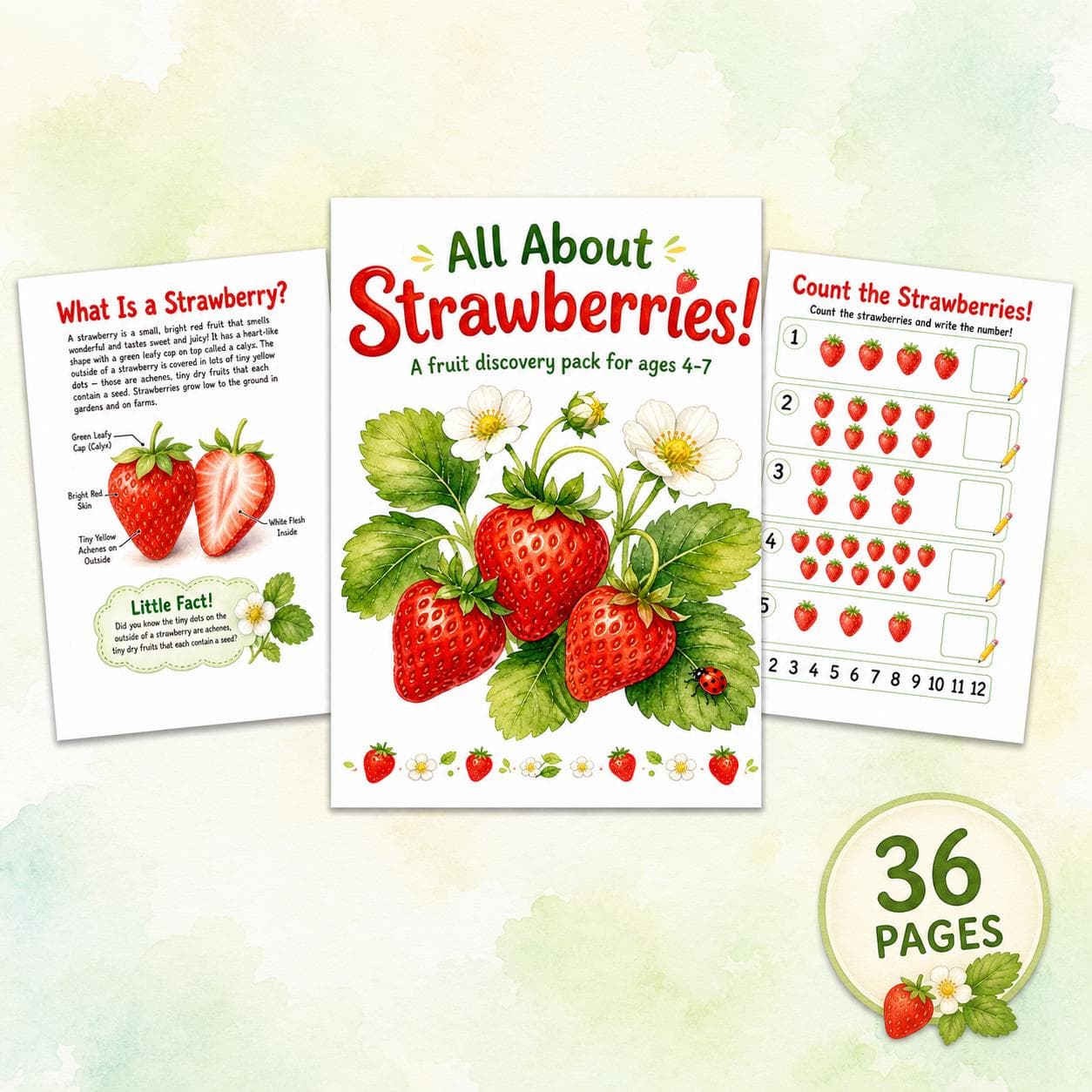
A plant cycle
Seed, grow, flower, fruit. Strawberries make this tasty and visible. You may skip eating if you prefer observation only.
Day 5
20–25 min
Step 5
Same idea, different bodies
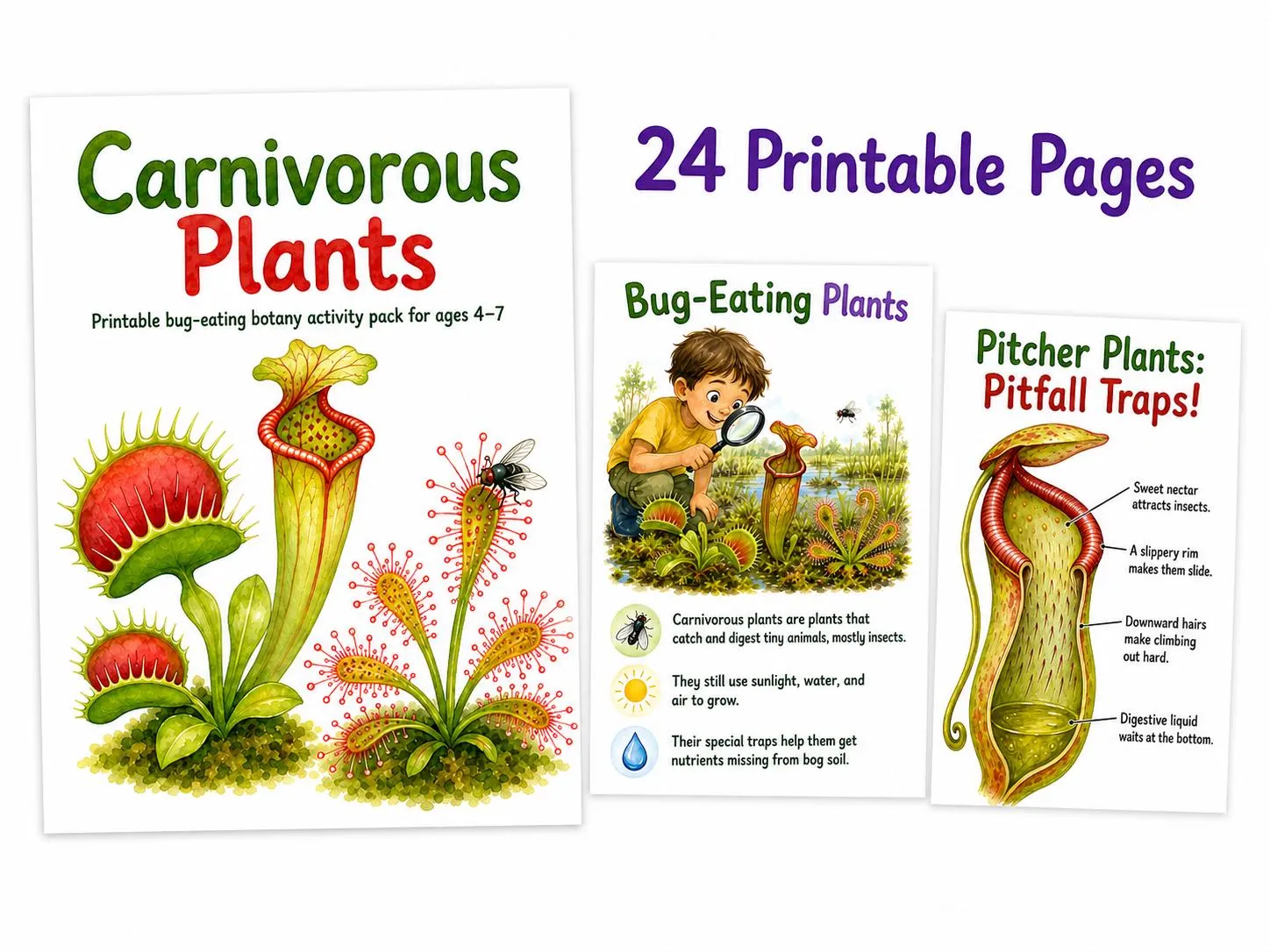
Two-column talk: frog versus plant, or chicken versus bee. Optional carnivorous-plant page as ‘plants can be unusual’—keep facts careful and age-right.
What to gather
- Sequence cards or printed cycle pages cut into steps if you like
- A real plant or egg carton for a concrete prop
- Glue stick only if the page asks for it
- A tray to keep small pieces together
Teach sequence as a story
Cut stages apart only if the child enjoys puzzles. Otherwise point down the page. The adult should model ‘first, next, then, last.’
Avoid worksheets that ask for spelling of every stage on day one. Oral retell is enough.
How to use the frog and chicken packs
Each pack can swallow a whole week alone. For this comparison week, take two or three pages from each. Put the rest away.
If illustrations differ slightly from a book, say that drawings simplify. Living things vary.
Bees are optional and useful
Complete metamorphosis is a bigger idea than frog metamorphosis. Introduce it only if day two felt easy. Otherwise bees wait for another week.
Connect to flowers if you already did a strawberry week. Cycles can overlap across months.
Plants belong in a life-cycle week
Children sometimes think only animals have babies. Fruit and seed make the plant story visible. A strawberry page about flowers and fruit is enough.
Do not require a child to memorize every plant part this week if that was last month’s work. Reuse it.
Unusual plants without sensationalism
Carnivorous plants catch small animals. That surprises children. Stay factual: some plants live in poor soil and get nutrients another way. No horror language.
Skip this printable if it distracts from frog-versus-chicken, which is the clearer comparison.
Evidence of learning
The child lines up two cycles and says one similarity and one difference. That is a strong finish for ages 4–7.
Photograph the sequence and date it if you keep a homeschool log. You do not need a graded quiz.
Common questions
Do we need live tadpoles or chicks?
No. Printables, books, and careful videos of real animals can support the idea. Live animals require housing knowledge and should not be an impulse purchase.
Is this a complete biology program?
No. It is a one-week comparison of life cycles as a supplement to your broader learning plan.
What if my child only wants dinosaurs?
Use dinosaur sizes another week. Life cycles here are living animals and plants you can compare with ordinary language.
Related homeschool guides
Topic week
Strawberry unit study week
Topic week
Ocean zones for ages 4–7
Topic week