Topic week
A Space Printable Week for Curious Kids
11 minute read · Updated September 7, 2026
Space weeks fail when every planet, rocket, and eclipse lands on Monday. Spread the ideas. Day one is the solar system as a neighborhood. Stars and sky lights wait until the child has a place for Earth.
Printables help children sort and label. They do not replace looking at the real moon. This plan is supplemental. Keep number and reading work in their usual slots unless you deliberately choose a space-themed practice page.
Optional printables
Pages that pair with this week
You do not need every pack. The first title is the spine; the others are contrasts. Guest checkout is available. These are supplements, not a full curriculum.
Spine pack
Optional extra
Optional extra
Optional extra
A five-day plan
Keep your usual reading and math. Use this block as the topic time. Skip a day if life is loud; the order matters more than the calendar.
Day 1
20–30 min
Step 1
Our neighborhood in space
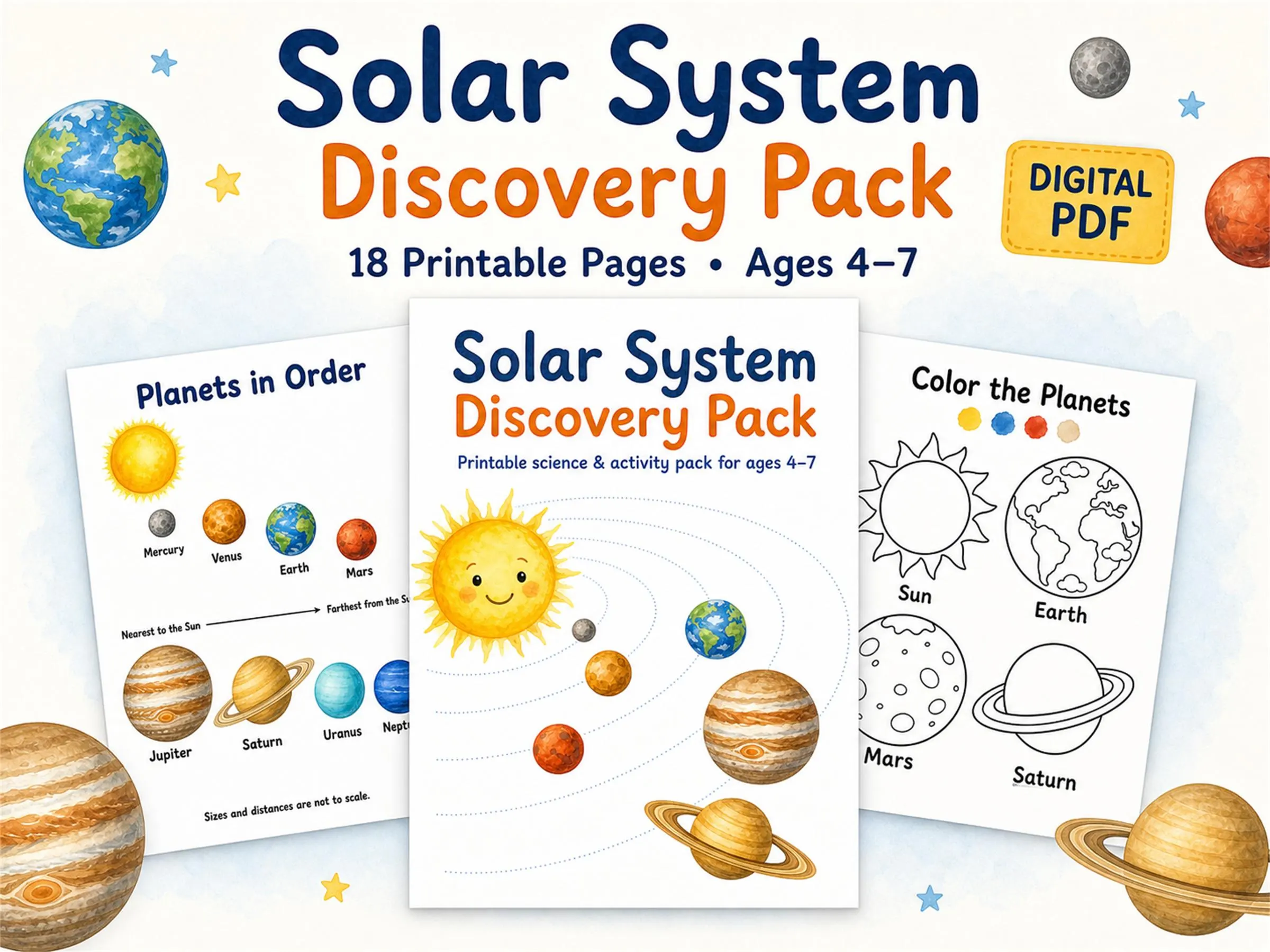
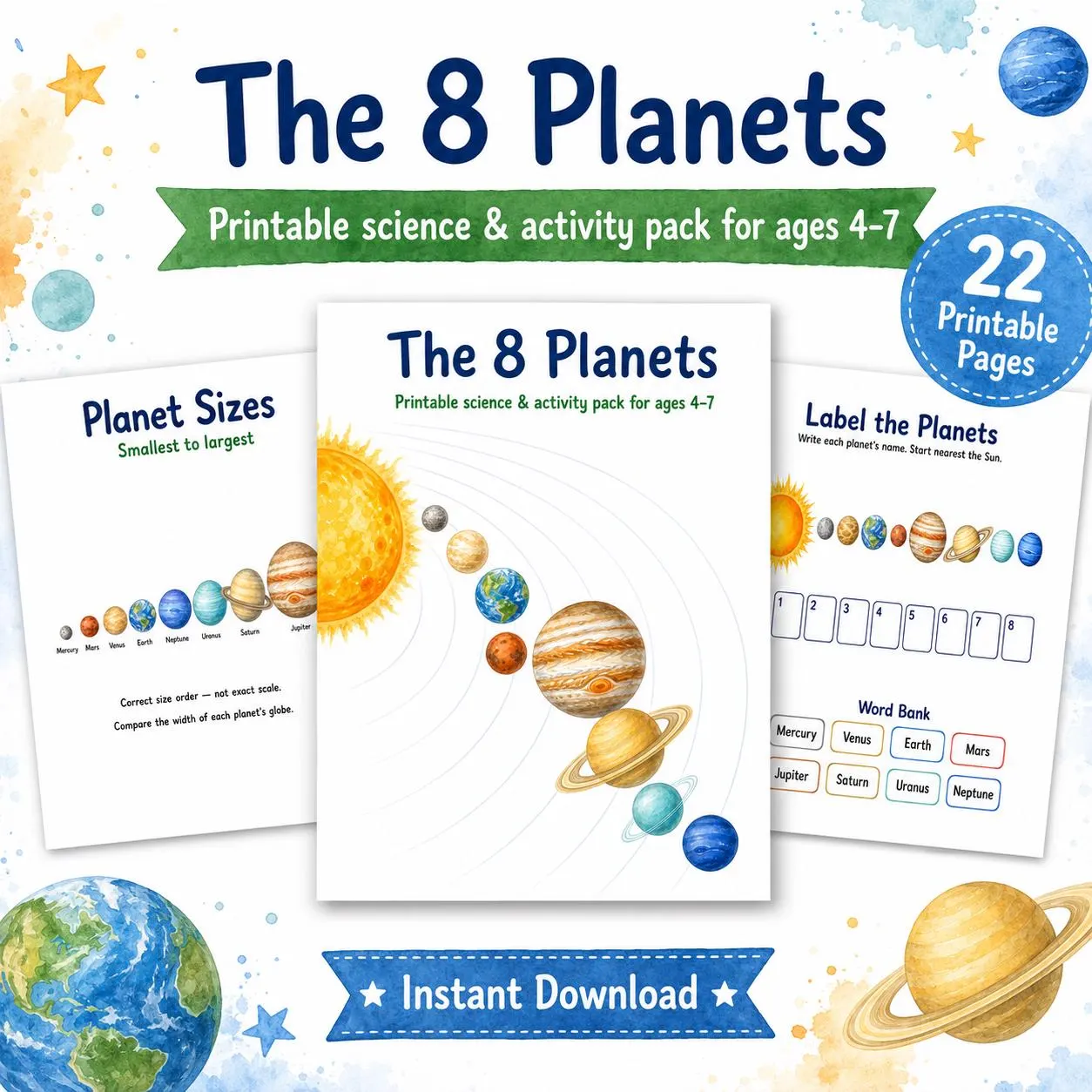
Sun in the center, Earth goes around it. Use a solar-system or eight-planets page to count and order, not to recite every fact.
Day 2
20–30 min
Step 2
How planets differ
Hot close in, cold farther out, as a kid-level idea. Compare sizes only with the printable’s pictures. Avoid fake scale claims.
Day 3
20–30 min
Step 3
Patterns in the night sky
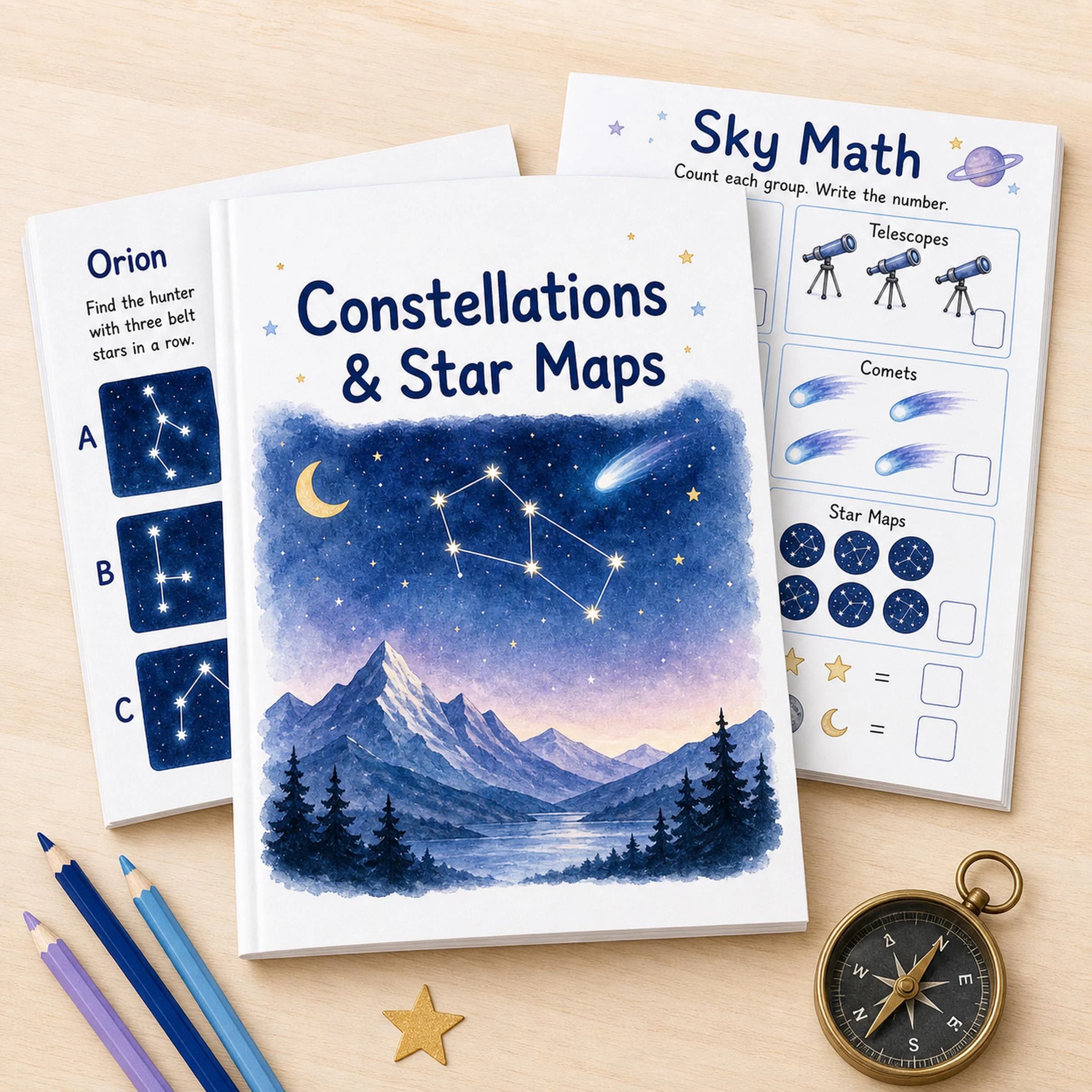
Constellations are pictures people drew around stars. Look at a star-map page, then try to find the moon outside if the sky is clear.
Day 4
25–35 min
Step 4
When light is blocked
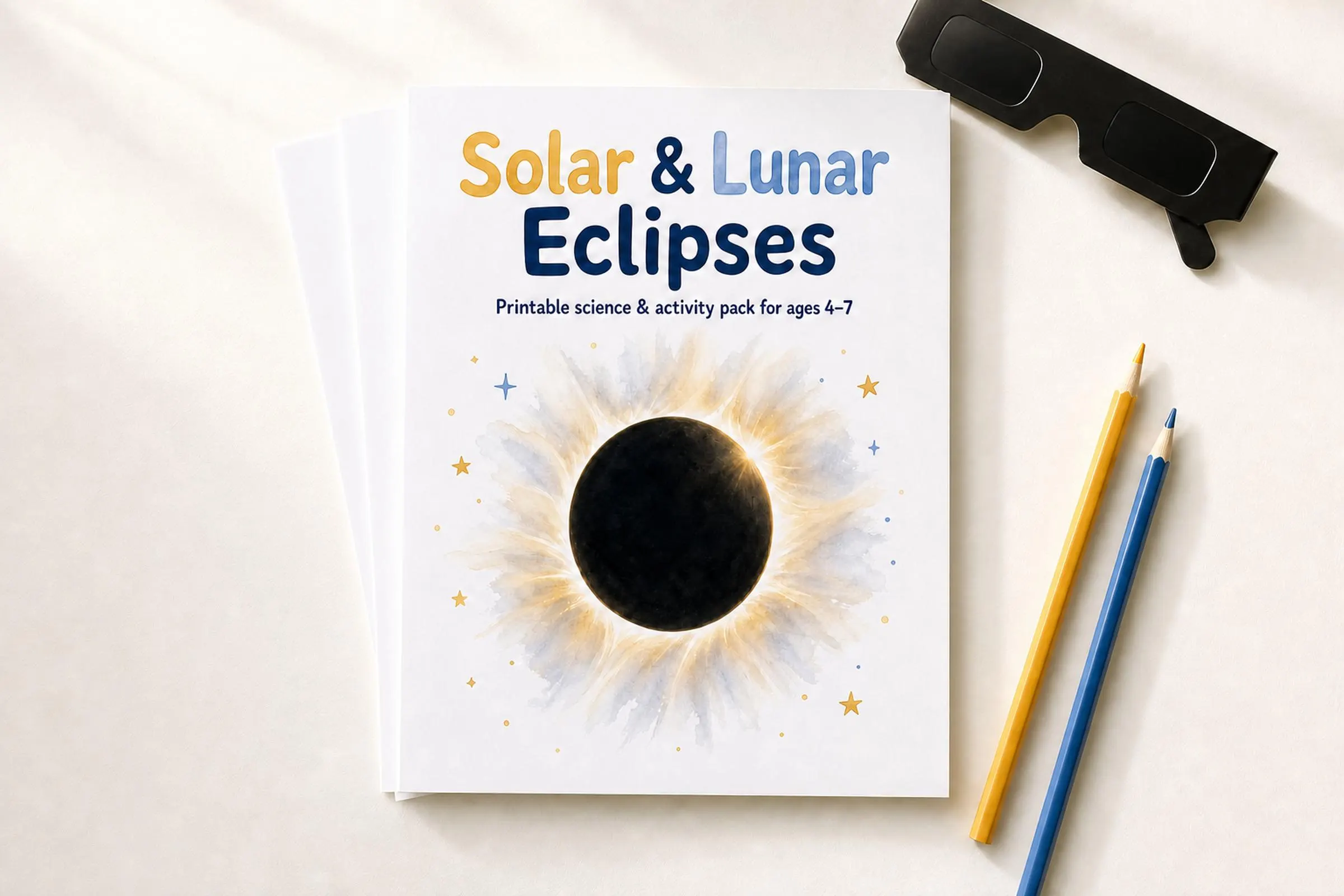
Model a solar or lunar eclipse with a lamp and balls. Then use one eclipse page to name what moved. Safety: never look at the sun.
Day 5
20–25 min
Step 5
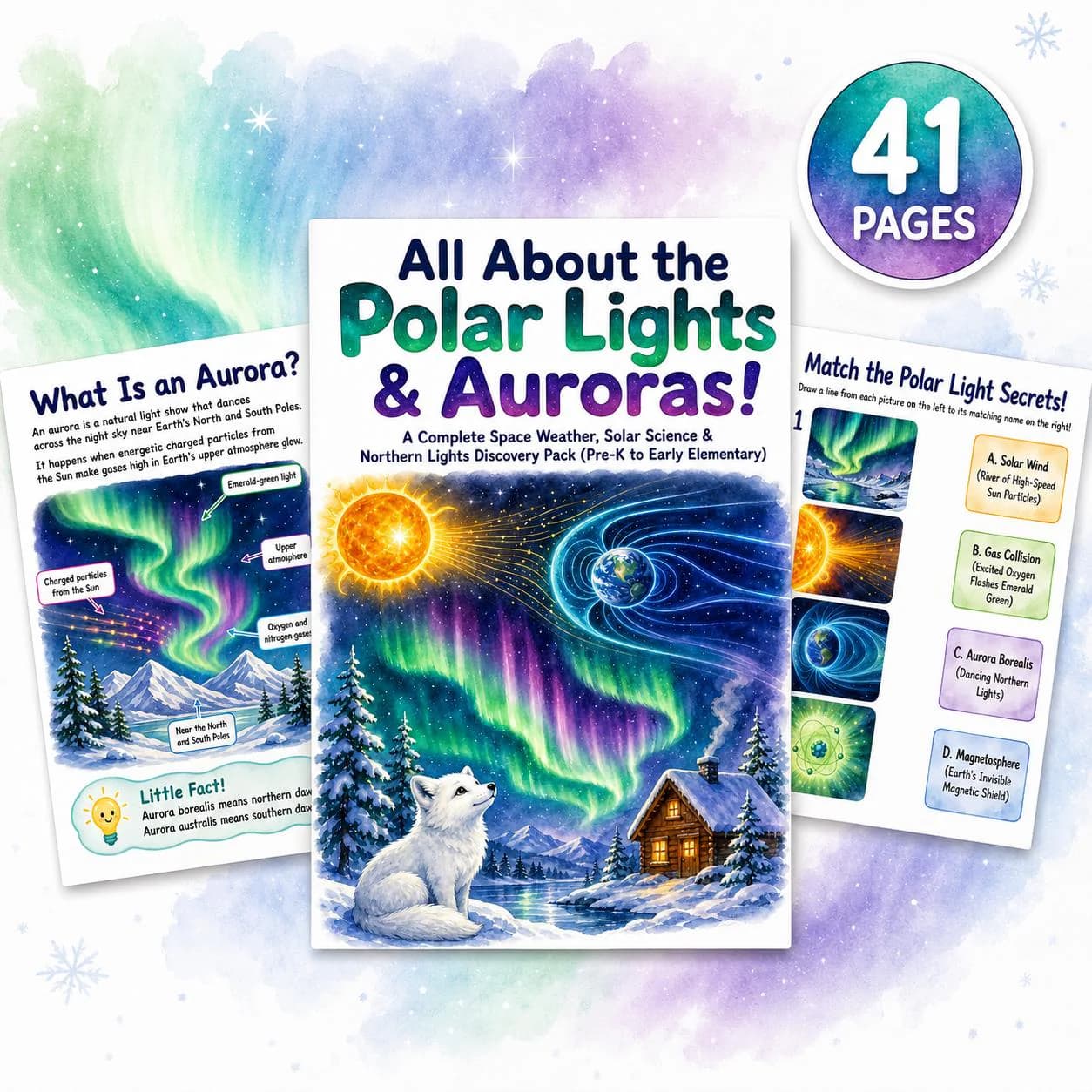
Lights in Earth’s sky
Auroras happen near Earth’s poles when the sky glows. Use an aurora page as Earth science, then have the child teach back two facts from the week.
What to gather
- A dark room or evening window
- A round object and a flashlight for moon phases or eclipses
- Printed planet or map pages for one day
- Optional: a simple star app used by an adult only, then put away
Start with the solar system, not trivia
Children remember a map of ‘home’ first. The eight-planets workbook and a shorter discovery pack can overlap; pick one as the spine so you are not duplicating Monday.
You do not need to teach dwarf planets, exoplanets, or spacecraft engineering this week.
How to use planet printables
Choose ordering, matching, and one information page. If a page lists many names, read three of them and save the rest. Ask the child to point to Earth every time.
Correct gently when a child puts Earth next to the sun as the hottest planet; the idea of distance is the lesson.
Constellations are stories on a map
Say clearly that the lines are made by people. The stars are real; the pictures are a memory tool. A star-map printable is for noticing patterns, not for navigation training.
Night looking is optional and weather-dependent. A clear photo in a book is honest if you cannot go outside.
Eclipses need a model and a safety rule
Never look directly at the sun. A lamp-and-ball model is the right tool for young children. The printable then gives words for what they already saw.
If an eclipse is not happening in your sky this month, you are still doing science. You are explaining a relationship, not waiting for an event.
Auroras belong at the end
Northern and southern lights are Earth phenomena. Placing them after planets prevents the child from thinking aurora is a planet name.
Keep the explanation light: energy and gases in the air can glow. Skip solar-wind lectures unless an older sibling asks.
What to skip
Skip horror-themed space, fake NASA claims, and packing every space SKU into one cart ‘for completeness.’ Five days cannot hold rockets, Mars rovers, and eclipses unless you drop something.
If the child is space-obsessed, repeat the week later with rockets as a new question rather than piling them into Friday.
Common questions
Should we watch a space video this week?
You can, after the model and the page, if you want a short, accurate clip. The week is designed to work without a screen.
Are these printables a space curriculum?
No. They are supplemental practice and diagrams. They do not replace a broader science plan if you need one.
What if bedtime is the only dark sky we have?
Two minutes of moon-looking is enough. Do the printable in daylight and connect it to the sky you actually saw.
Related homeschool guides
Topic week
Strawberry unit study week
Topic week
Ocean zones for ages 4–7
Topic week