Topic week
Ocean Zones for Ages 4–7: A Screen-Free Homeschool Week
11 minute read · Updated September 7, 2026
Ocean zones are easier than they sound. Near the surface there is more light. Deeper water is darker, colder, and under more pressure. Children ages 4–7 do not need every named layer. They need a vertical picture: top, middle, deep.
This week stays screen-free. A flashlight and a stack of pages beat a video if the child has to place animals and explain why. It is a supplement, not a marine-biology course.
Optional printables
Pages that pair with this week
You do not need every pack. The first title is the spine; the others are contrasts. Guest checkout is available. These are supplements, not a full curriculum.
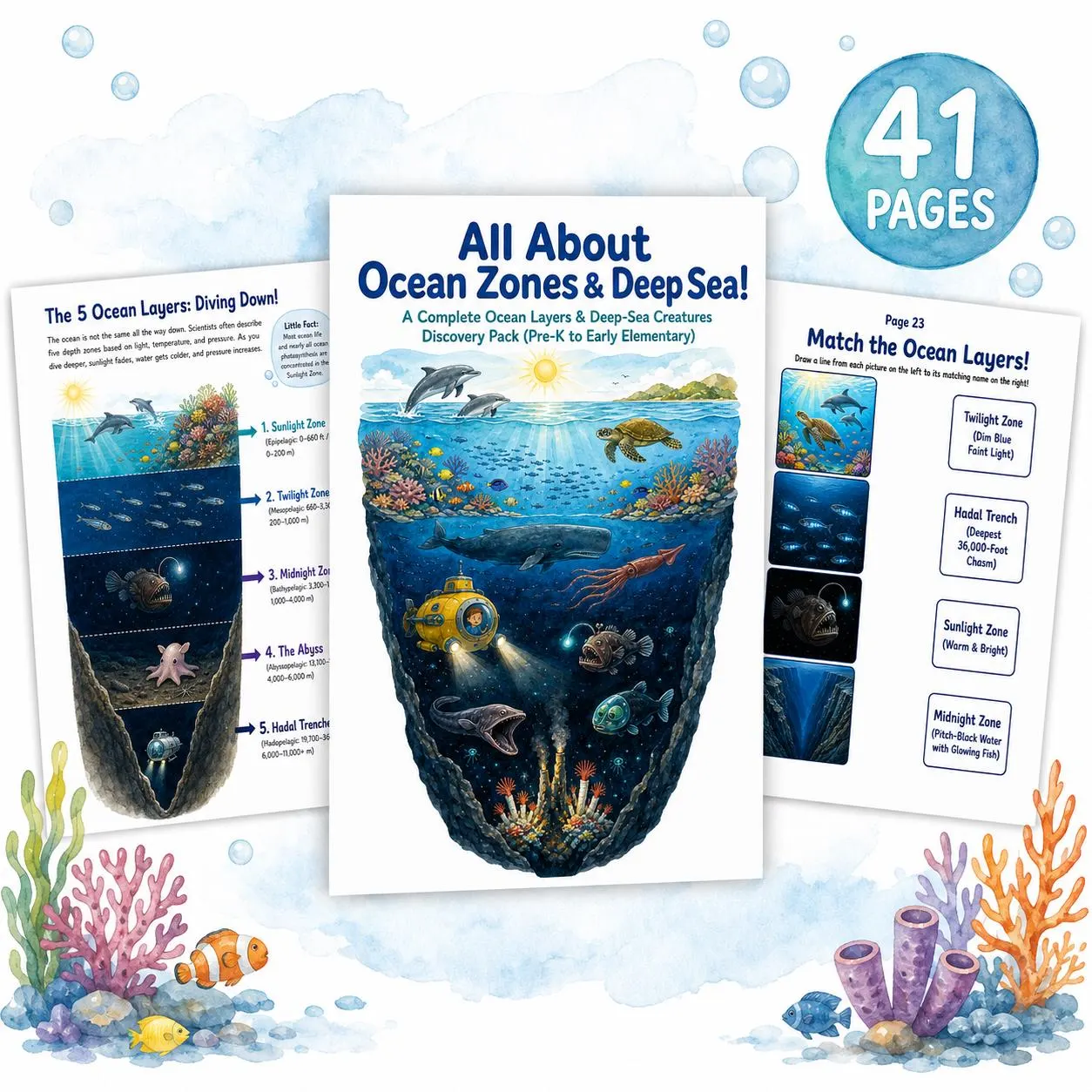
Spine pack
Optional extra
Optional extra
Optional extra
A five-day plan
Keep your usual reading and math. Use this block as the topic time. Skip a day if life is loud; the order matters more than the calendar.
Day 1
20–30 min
Step 1
Make a water column
Draw or fold paper into three bands: bright, dim, dark. Place a toy or drawing at the top. Talk about sunlight. Add one ocean-zones page that matches this model.
Day 2
20–30 min
Step 2
Who lives near the light?
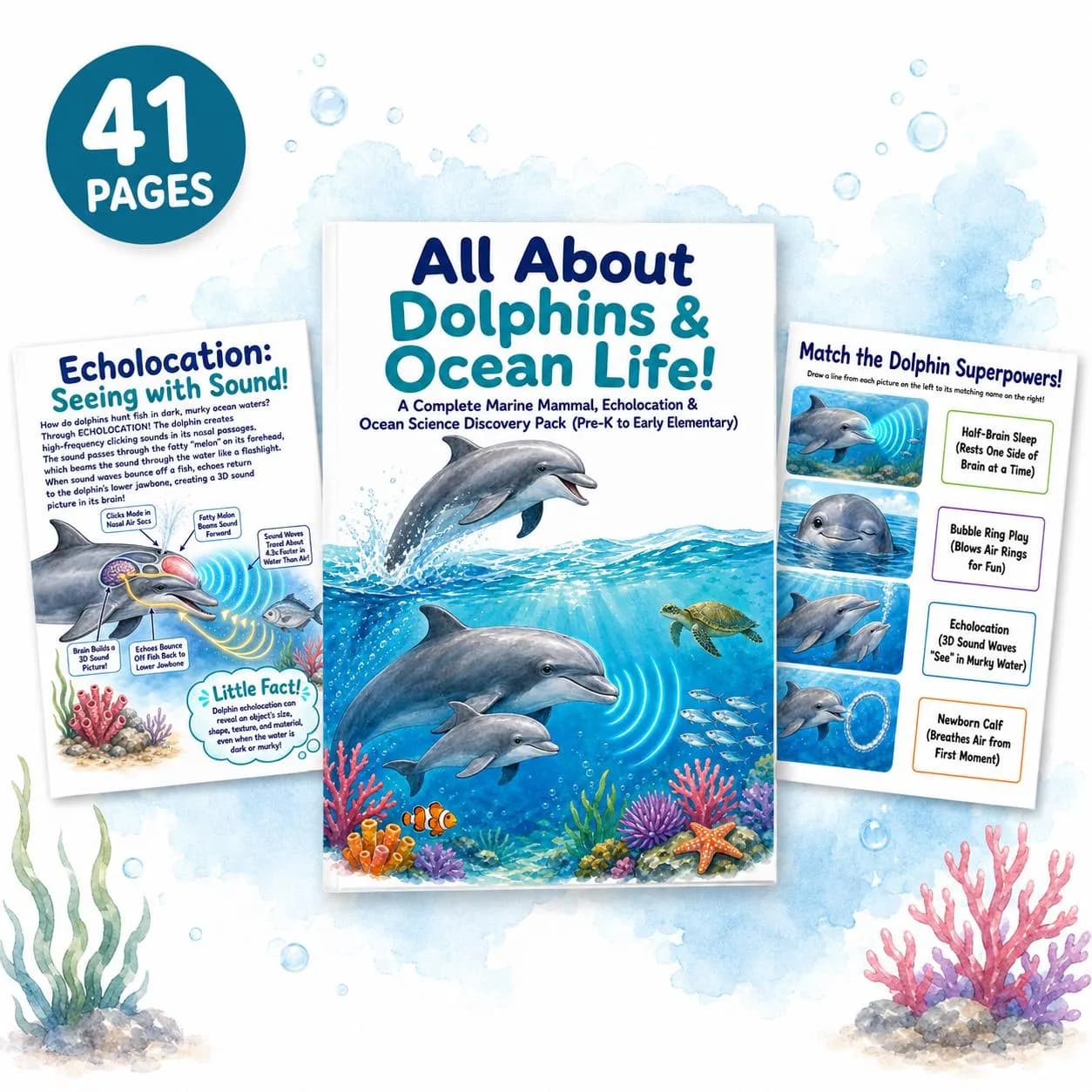
Dolphins, many fish, and boats belong nearer the surface. Use a dolphin page for echolocation only if the child is ready; otherwise stay with habitat matching.
Day 3
25–35 min
Step 3
What changes as we go down?
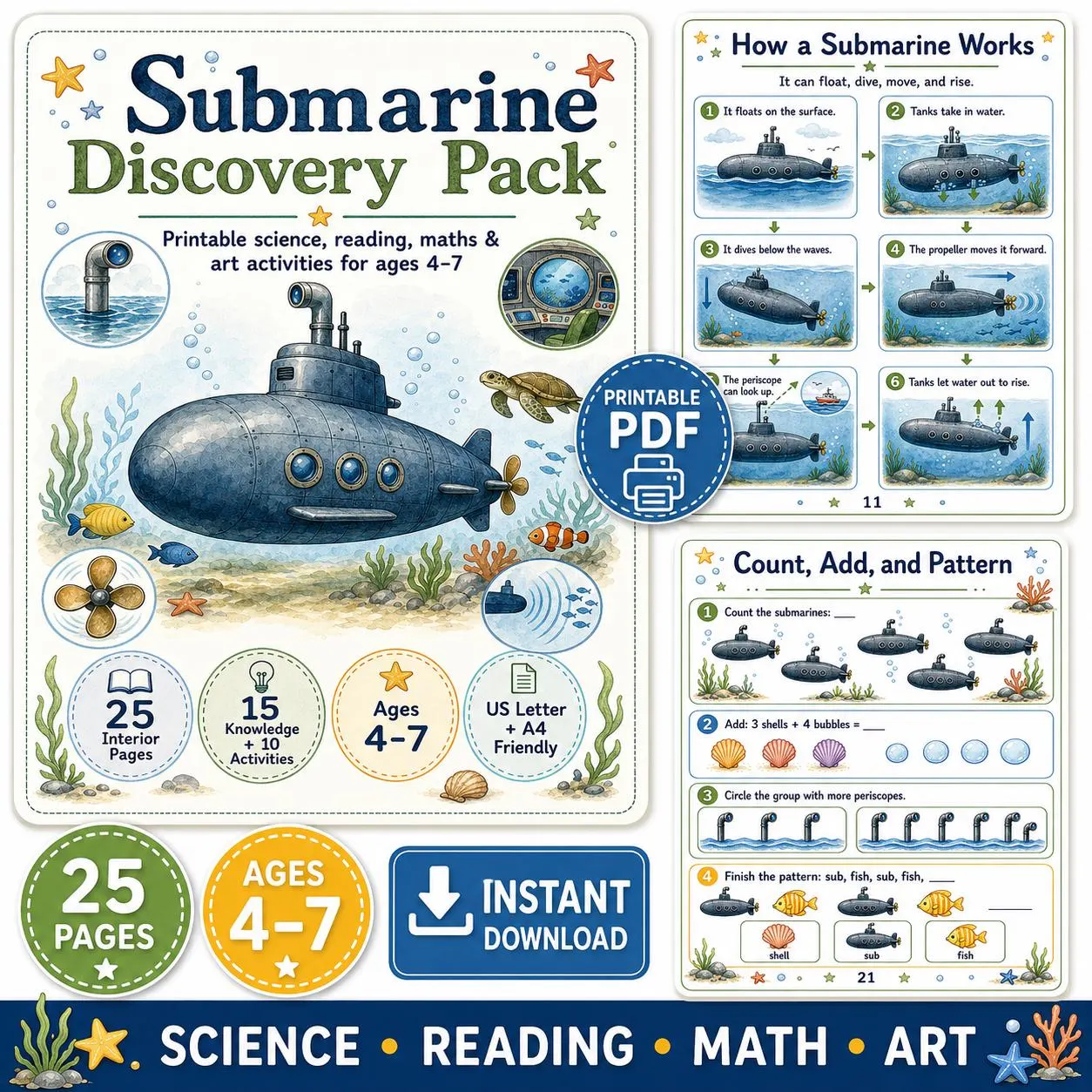
Colder, darker, more pressure. A submarine page can be a vehicle for the idea, not a mechanics lecture. Ask what a person would need in the dark.
Day 4
20–30 min
Step 4
Deep-sea light
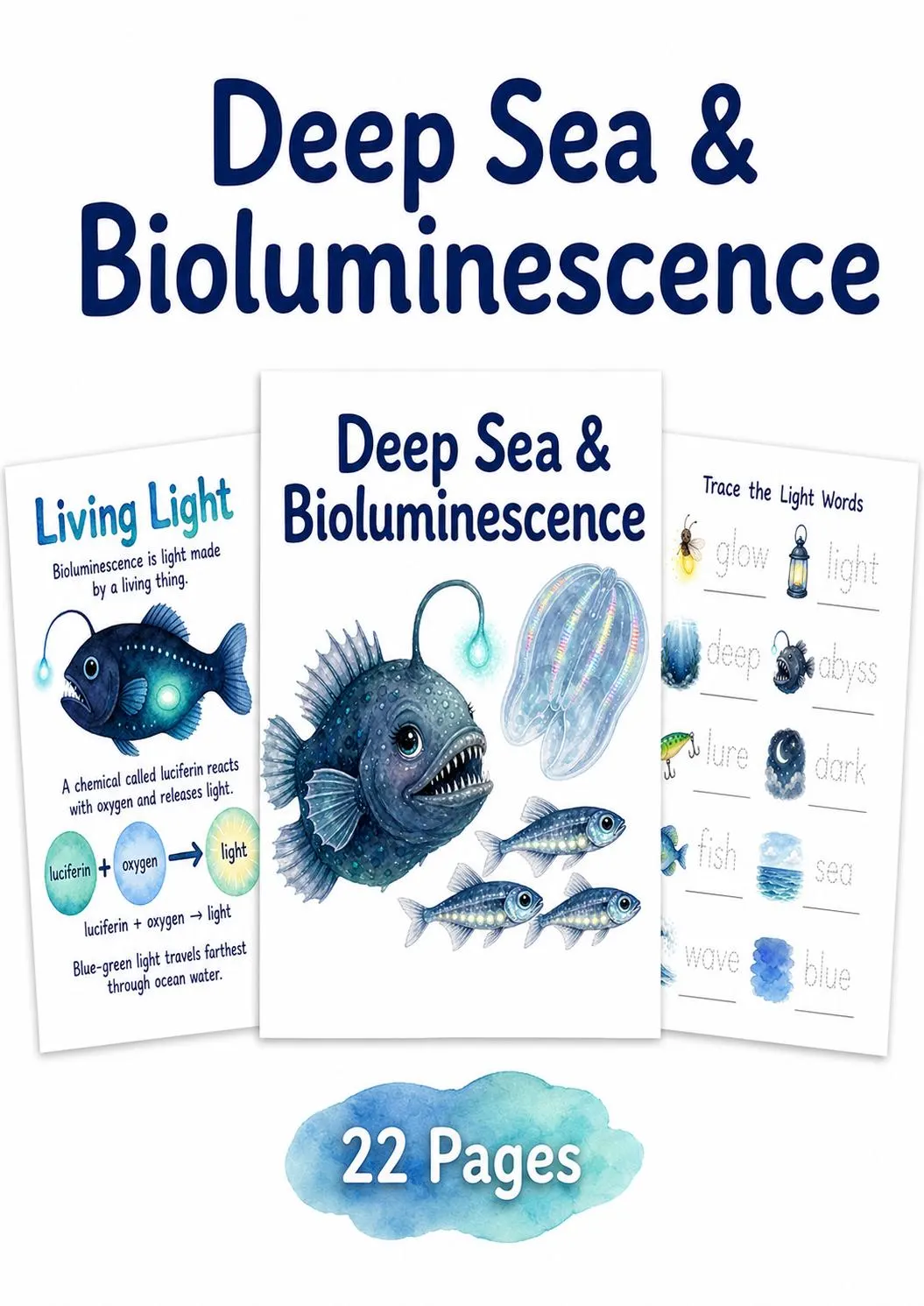
Some animals make their own light. Use a bioluminescence page after the child has the dark-zone idea. Keep facts humble: we are noticing a strategy, not listing every species.
Day 5
20–25 min
Step 5
Tell the layers
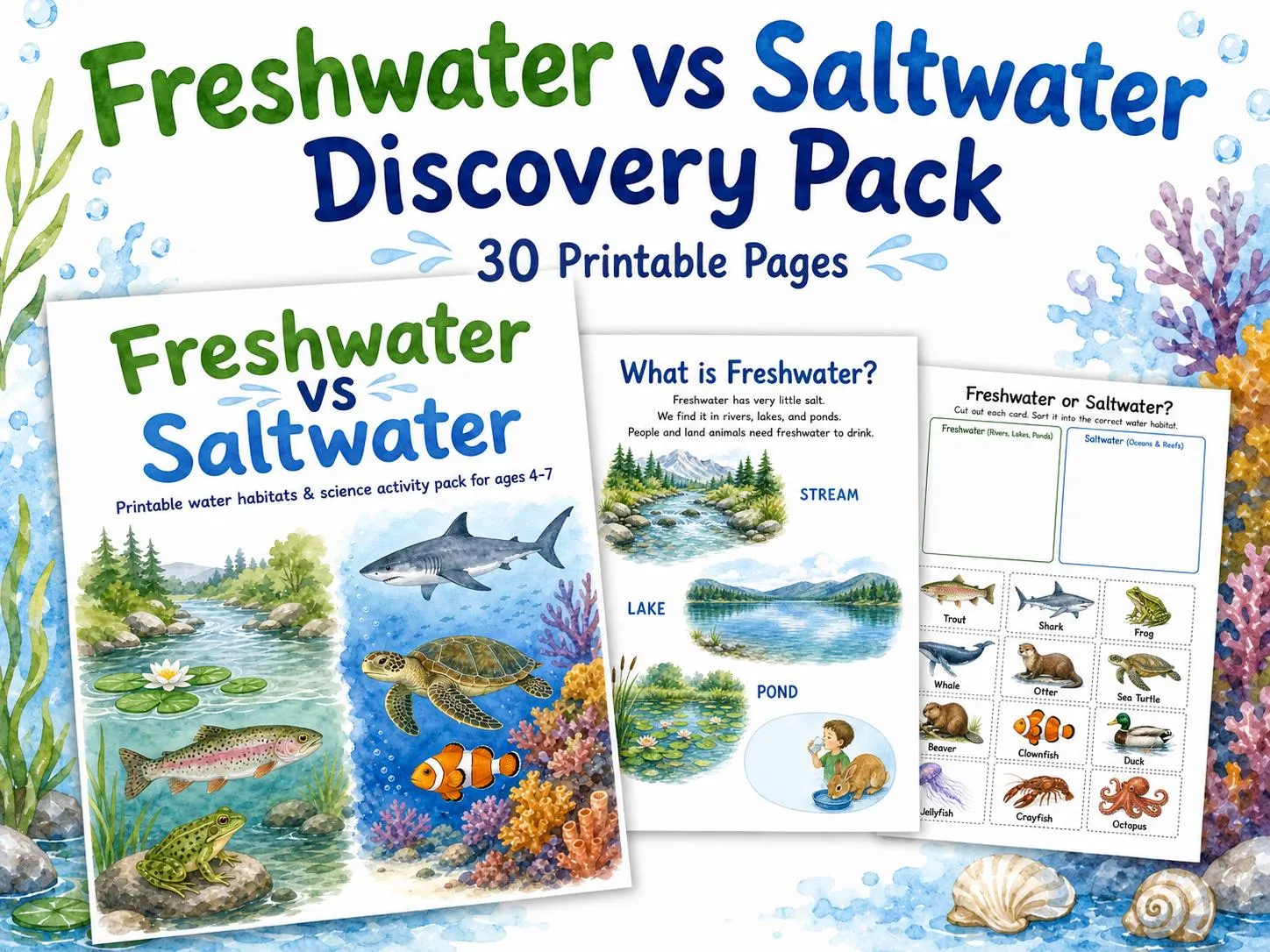
The child points to top, middle, and deep and places two animals. Optional: contrast a lake or river (fresh water) with the ocean (salt water) in one short conversation.
What to gather
- Blue paper or a plain table for a ‘water column’
- A flashlight for a sunlight-zone demo
- Pencils and crayons
- Printed zone or animal pages for one day at a time
Keep the science honest and small
Named zones in adult textbooks are more detailed than a 4–7-year-old needs. If a printable shows several layers, cover all but three on the first day. Accuracy means not inventing glowing dolphins in the trenches.
When you do not know a fact, say so and write the question down. Ocean books from the library beat guessing.
How to use the ocean zones printable
Find pages that show layers, matching, and one informational diagram. Skip dense reading pages if your child is not reading independently. You can read captions aloud.
After a matching page, ask the child to put the paper away and rebuild the layers from memory with blank paper. That transfer is the learning.
Dolphins belong in the sunlit story
Echolocation is a sound idea, not a zone idea. Introduce it only after the child knows dolphins live where there is light and air at the surface. Mixing every ocean topic in one sitting creates noise.
If the dolphin pack feels like too much, use one image from a book instead. The week still works.
Deep sea without nightmares
Pressure and darkness can worry some children. Keep language matter-of-fact. Bioluminescence is a tool animals use, like a flashlight, not a monster movie.
Stop if the child is unsettled. Return to the surface zone and boats. Curiosity should feel safe.
Optional: fresh water versus salt water
A lake is not an ocean. Taste is not required—never encourage drinking unknown water. Talk about where people swim, where fish live, and why oceans taste salty using a reliable children's explanation.
This contrast helps if your family has visited both a lake and a beach. Skip it if it crowds the zone model.
What ‘done’ looks like
Success is a child who can order three layers and give one reason an animal might live near the top or the deep. Completing every page in every pack is not the measure.
Older siblings can extend with the deep-sea mysteries pack for ages 7–10 while the younger child stays with three layers.
Common questions
How many ocean zones should a 5-year-old learn?
Three ideas are enough: more light at the top, darker water below, and a deep layer where sunlight does not reach. Named adult zones can wait.
Is this a complete ocean unit?
No. It is a one-week supplement. Use it beside your usual literacy and math, not instead of them.
Can we do this without buying every ocean printable?
Yes. The ocean zones pack is the spine. Dolphin, deep-sea, submarine, and freshwater pages are optional extensions.
Related homeschool guides
Topic week
Strawberry unit study week
Topic week
Space printable week
Topic week