Topic week
A Dinosaur Learning Week for Kids: Size, Evidence, and Play
11 minute read · Updated September 7, 2026
Dinosaur weeks go wrong when cartoons and facts collapse into one pile. Separate them. Monday is ‘how big,’ Tuesday is ‘how do we know,’ and play stays play.
You likely do not need every dinosaur SKU in the shop. One size-and-weight pack plus one general activity pack is plenty. A Triceratops pack is an optional deep dive if that animal is the current obsession.
Optional printables
Pages that pair with this week
You do not need every pack. The first title is the spine; the others are contrasts. Guest checkout is available. These are supplements, not a full curriculum.
Spine pack
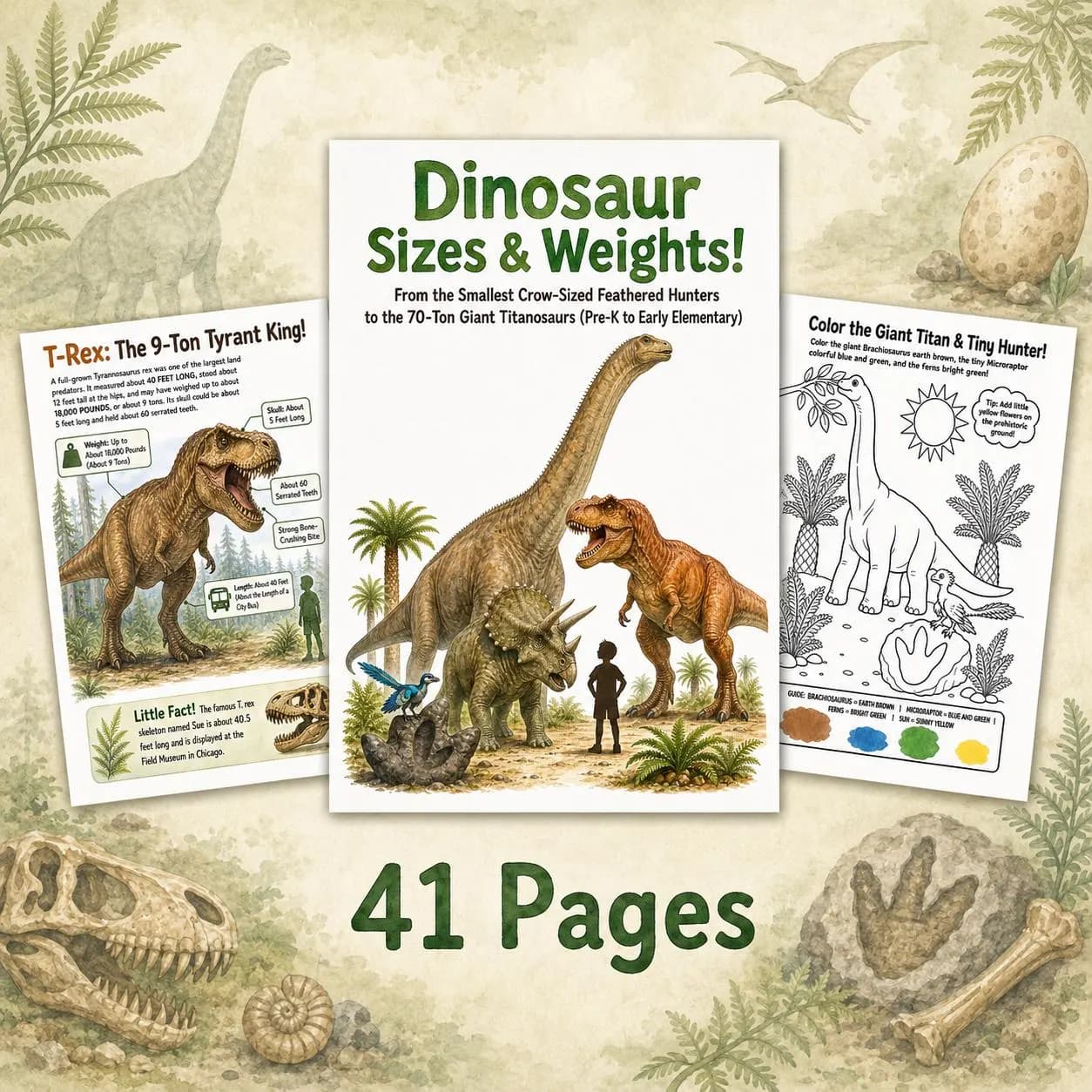
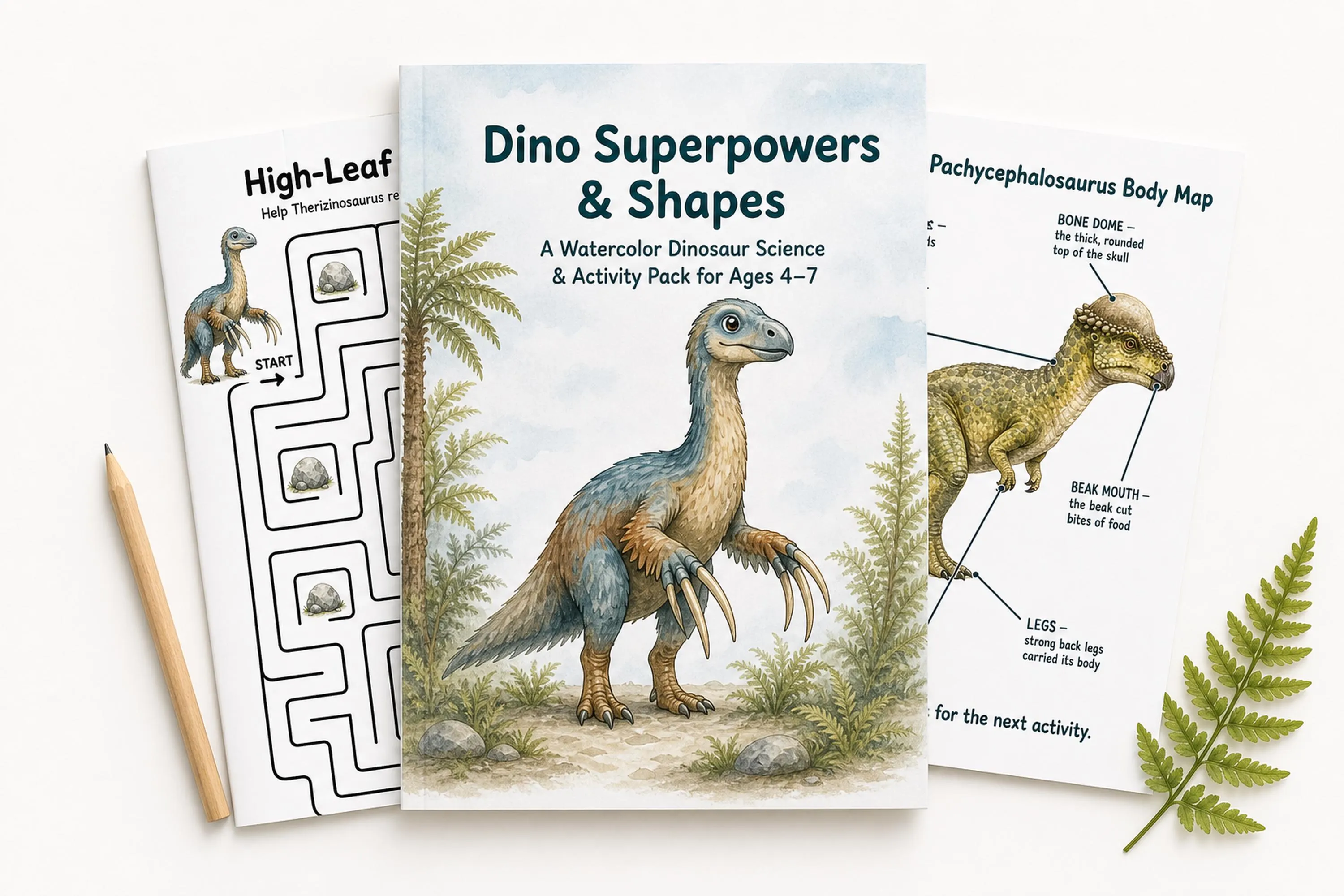
Optional extra
A five-day plan
Keep your usual reading and math. Use this block as the topic time. Skip a day if life is loud; the order matters more than the calendar.
Day 1
20–30 min
Step 1
Bigger than, smaller than
Compare a dinosaur length to a room, a car, or a string on the floor. Then use a sizes-and-weights page to match pictures to ‘huge, medium, smaller.’
Day 2
20–30 min
Step 2
How do we know?
Bones, tracks, and scientists’ drawings from fossils. Look at a book. Say what is observation and what is a reconstruction.
Day 3
20–30 min
Step 3
One dinosaur up close
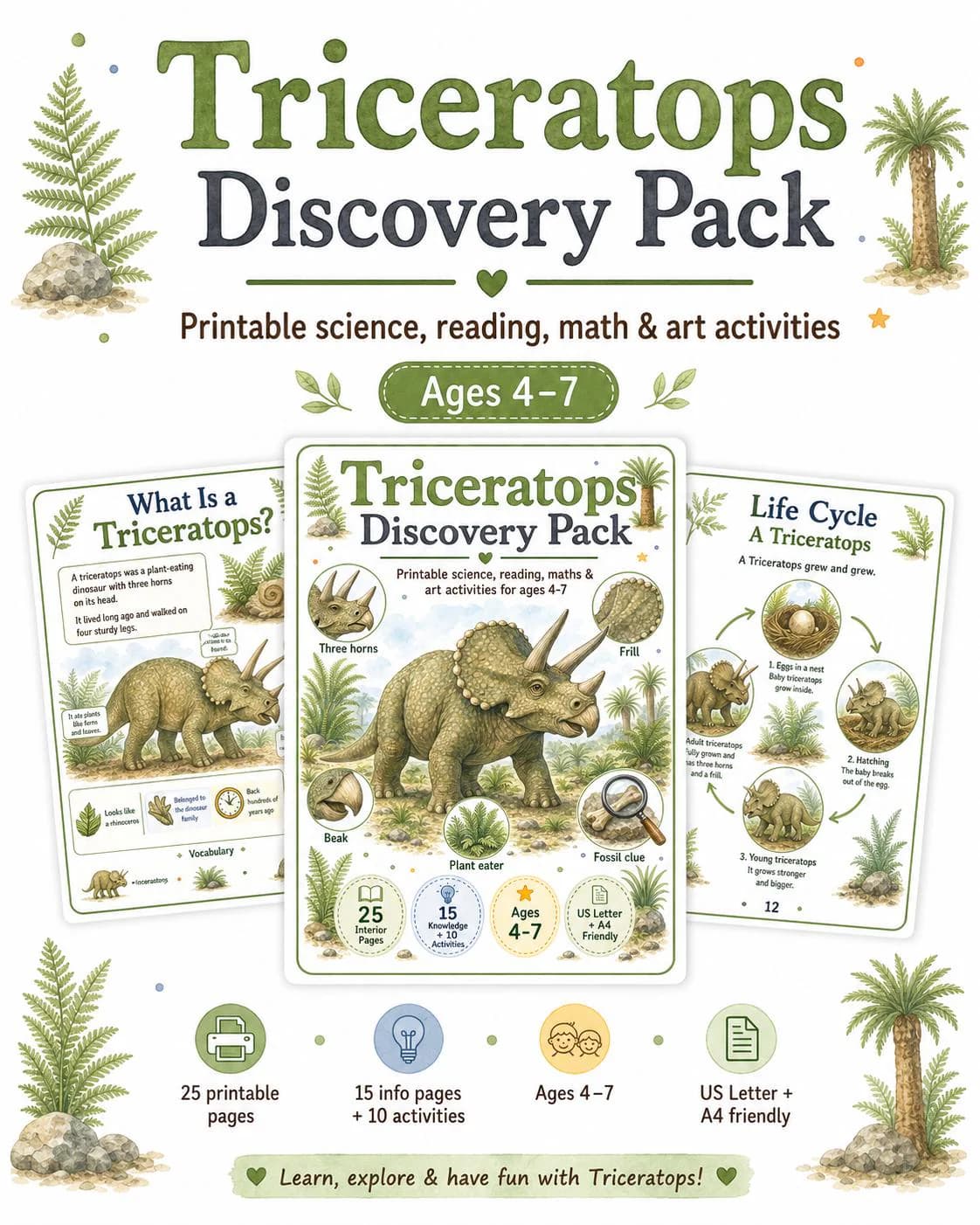
If you have a Triceratops pack, use two pages. If not, pick one animal from the general pack and ignore the rest.
Day 4
20–30 min
Step 4
Hands-on without a mess mandate
Sorting, tracing, or a small excavation-style fine-motor page. Playdough footprints are optional, not required.
Day 5
20–25 min
Step 5
Teach-back museum
The child makes a ‘museum card’: name or drawing, one size fact, one evidence fact. Display it on the fridge.
What to gather
- Blocks or string for a simple size comparison
- A library dinosaur book with realistic pictures
- Printed size or matching pages for one day
- Playdough or sand only if you already have it
Size is a math idea wearing dinosaur clothes
The sizes-and-weights pack exists so comparison is the goal. Read numbers aloud if the child cannot yet. Standing up and walking the length of a ‘dinosaur’ in the hallway matters more than writing the numeral.
Do not claim a precise live weight as if you weighed a Tyrannosaurus. Scientists estimate. That honesty is part of the lesson.
How to use two dinosaur packs without doubling work
Skim both tables of contents. Assign pack A to size and pack B to matching or fine motor. Duplicate coloring pages are not a second day’s science.
If a page fights the book you trust, trust the better-sourced book and skip the page.
Evidence versus entertainment
It is fine to enjoy a dinosaur movie after the lesson. Name it as a story. Feathers, posture, and sounds in films are often guesses or inventions.
Your job is not to ruin fun. It is to keep a slot in the week where evidence is the game.
Obsession is an asset
A child who only wants dinosaurs can still count, measure, and describe. Do not hide ordinary math if the dinosaur page is too easy or too hard. Adjust the numbers, keep the theme if it helps attention.
When obsession blocks every other subject, keep dinosaur time bounded: this week’s science block, not the entire day.
Optional Triceratops focus
One herbivore with horns is easier than a survey of the Mesozoic. Use the discovery pack for parts of the body and habitat at a simple level.
Skip it if the child is currently loyal to another species. Swap the name; keep the structure.
Finish without a quiz
A museum card, a measured string, and a sentence about fossils is a complete week. Remaining pages can become Friday choice time later in the month.
These materials are supplemental printables, not a full history of life on Earth.
Common questions
Are dinosaurs too scary for a 4-year-old?
Some children find teeth frightening. Stay with herbivores, size comparisons, and footprints. Stop if play turns to fear.
Do I need the bundle as well as single packs?
No. This week is written for individual packs. A bundle is only useful if you already want several dinosaur titles.
Can this replace our science curriculum?
No. It is an interest-led supplement for one week of comparison, evidence talk, and optional printables.
Related homeschool guides
Topic week
Strawberry unit study week
Topic week
Ocean zones for ages 4–7
Topic week